
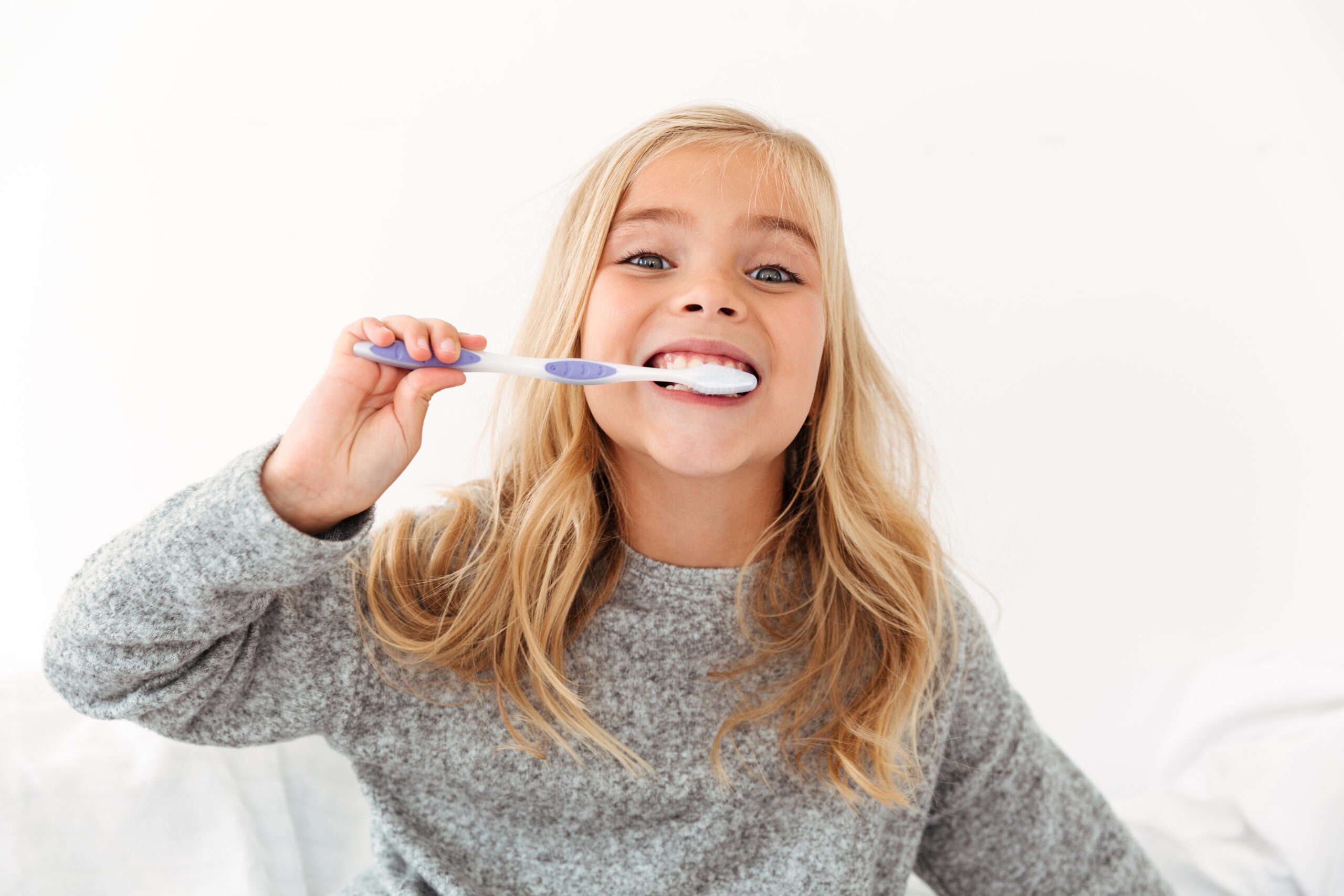

Good dental care starts from the moment your child’s first tooth appears. Establishing a regular brushing routine and visiting the dentist early can help keep your child’s teeth healthy and prevent tooth decay.
Toothbrushing Tips
Children aged up to 3 years
- Start brushing your baby’s teeth as soon as their first milk tooth comes through (usually around 6 months old).
- A parent or carer should brush their child’s teeth.
- Brush twice a day for around 2 minutes:
- once before bedtime
- once at another time during the day
- Use children’s fluoride toothpaste containing at least 1,000ppm fluoride, unless your dentist recommends a stronger toothpaste.
- Only use a small smear of toothpaste.
- Encourage your child not to eat or lick toothpaste.
Children aged 3 to 6 years
- Brush teeth twice a day for around 2 minutes.
- Make sure brushing happens before bed and at least once more during the day.
- Let your child practise brushing, but supervise them to make sure their teeth are cleaned properly.
- Use children’s fluoride toothpaste containing 1,000ppm–1,500ppm fluoride.
- Use a pea-sized amount of toothpaste.
- Encourage your child to spit out the toothpaste after brushing and avoid rinsing with water, as this reduces the effect of fluoride.
Children aged 7 years and over
- Brush twice daily for around 2 minutes.
- Brush before bedtime and at least once more during the day.
- Use fluoride toothpaste containing 1,350ppm–1,500ppm fluoride.
- Spit out toothpaste after brushing and do not rinse.
- Most children can brush their own teeth by this age, but it is still helpful for parents or carers to check they are brushing properly.
Helping Your Child Brush Properly
You can help your child develop good brushing habits by:
- Guiding their hand so they learn the correct brushing movements.
- Using a mirror so they can see where they are brushing.
- Choosing a small, soft toothbrush suitable for their age.
- Using gentle circular movements when brushing.
- Remembering to clean all tooth surfaces, including behind the teeth and along the gums.
- Making brushing fun by using a timer to help them brush for 2 minutes.
Never allow children to walk or run around with a toothbrush in their mouth, as they could injure themselves.
Taking Your Child to the Dentist
Children can receive free NHS dental care.
Take your child to the dentist when their first milk teeth appear, or before they are 12 months old. Early visits help children become familiar with the dental environment and allow the dentist to:
- Give advice on caring for your child’s teeth.
- Help prevent tooth decay.
- Identify any dental problems early.
- Make future dental visits feel more comfortable.
Try to make dental visits a positive experience by staying calm and encouraging your child. Continue taking your child for regular check-ups as recommended by the dentist.
Fluoride Varnish and Fissure Sealants
Fissure Sealants
Fissure sealants can be applied when your child’s permanent back teeth start to appear (usually around age 6–7) and again when their remaining adult teeth come through (around ages 11–14).
A thin protective coating is placed over the chewing surfaces of the back teeth. This helps prevent food and bacteria getting into the grooves of the teeth and can protect against decay for up to 4 years.
Fluoride Varnish
Fluoride varnish is a treatment that involves painting a strong fluoride coating onto the teeth to help prevent decay.
- It can be used on both baby teeth and adult teeth.
- It works by strengthening tooth enamel and making teeth more resistant to decay.
- From age 3, children should usually be offered fluoride varnish at least twice a year.
- Younger children may also receive it if their dentist thinks it would be helpful.
Ask your dentist about fluoride varnish and fissure sealants to find out what treatments are suitable for your child.