


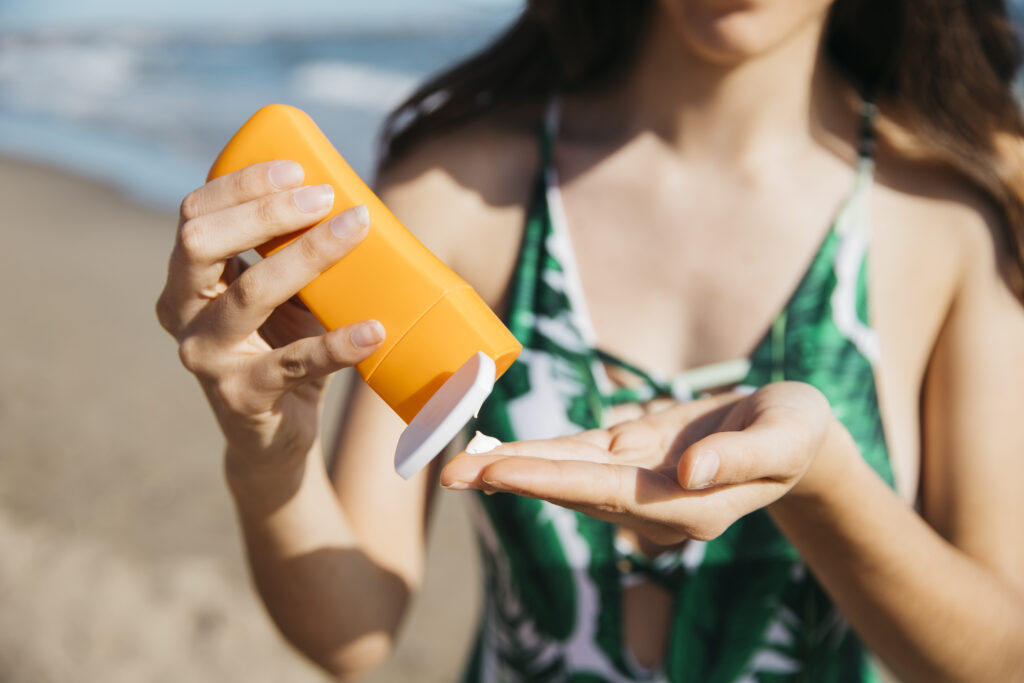
Advice for adults and children on sunscreen and sun safety in the UK and abroad.
Sunburn increases your risk of skin cancer. Sunburn does not just happen on holiday. You can burn in the UK, even when it’s cloudy.
There’s no safe or healthy way to get a tan. A tan does not protect your skin from the sun’s harmful effects.
Aim to strike a balance between protecting yourself from the sun and getting enough vitamin D from sunlight.
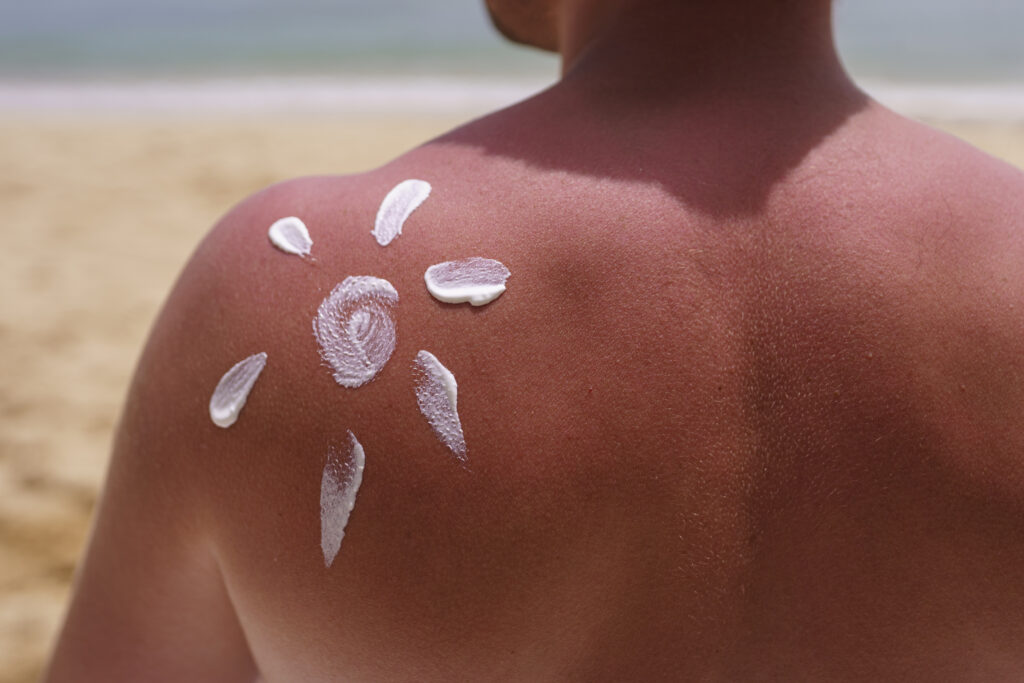
Sun safety tips
Spend time in the shade when the sun is strongest. In the UK, this is between 11am and 3pm from March to October.
You can also check the UV index on a weather app or website. If it’s 3 or higher, consider protecting your skin.
Make sure you:
- spend time in the shade between 11am and 3pm
- never burn
- cover up with suitable clothing and sunglasses
- take extra care with children
- keep babies under 6 months out of direct sunlight
- use at least factor 30 sunscreen – make sure to use enough and re-apply frequently
What factor sunscreen (SPF) should I use?
Do not rely on sunscreen alone to protect yourself from the sun. Wear suitable clothing and spend time in the shade when the sun’s at its hottest.
When buying sunscreen, the label should have:
- a sun protection factor (SPF) of at least 30 to protect against UVB
- at least 4-star UVA protection
UVA protection can also be indicated by the letters “UVA” in a circle, which indicates that it meets the EU standard.
Make sure the sunscreen is not past its expiry date. This is marked by a symbol of an open jar, an M and a number, which shows how many months the sunscreen will last once it’s been opened.
Do not spend any longer in the sun than you would without sunscreen.
What are the SPF and star rating?
The sun protection factor, or SPF, is a measure of the amount of ultraviolet B radiation (UVB) protection.
SPFs are rated on a scale of 2 to 50+ based on the level of protection they offer, with 50+ offering the strongest form of UVB protection.
The star rating measures the amount of ultraviolet A radiation (UVA) protection. You should see a star rating of up to 5 stars on UK sunscreens. The higher the star rating, the better.
Sunscreens that offer both UVA and UVB protection are sometimes called broad spectrum.
How to apply sunscreen
Most people do not apply enough sunscreen.
As a guide, adults should aim to apply around 6 to 8 teaspoons of sunscreen if you’re covering your entire body.
If sunscreen is applied too thinly, the amount of protection it gives is reduced.
If you plan to be out in the sun long enough to risk burning, sunscreen needs to be applied twice:
- 30 minutes before going out
- just before going out
Sunscreen should be applied to all exposed skin, including the face, neck and ears, and head if you have thinning or no hair, but a wide-brimmed hat is better.
Sunscreen needs to be reapplied liberally and frequently, and according to the manufacturer’s instructions.
This includes applying it straight after you have been in water, even if it’s “water resistant”, and after towel drying, sweating or when it may have rubbed off.
It’s also recommended to reapply sunscreen every 2 hours, as the sun can dry it off your skin.
Swimming and sunscreen
Water washes sunscreen off, and the cooling effect of the water can make you think you’re not getting burned. Water also reflects ultraviolet (UV) rays, increasing your exposure.
Use water-resistant sunscreen if it’s likely you’ll sweat or have contact with water.
Sunscreen should be reapplied straight after you have been in water, even if it’s “water resistant”, and after towel drying, sweating or when it may have rubbed off.
Children and sun protection
Take extra care to protect babies and children. Their skin is much more sensitive than adult skin, and damage caused by repeated exposure to sunlight could lead to skin cancer developing in later life.
Children aged under 6 months should be kept out of direct strong sunlight. Find out more about keeping your baby safe in the sun.
From March to October in the UK, children should:
- cover up with suitable clothing
- spend time in the shade, particularly from 11am to 3pm
- wear at least SPF30 sunscreen
Apply sunscreen to areas not protected by clothing, such as the face, ears, feet and backs of hands.
To ensure they get enough vitamin D, all children under 5 are advised to take vitamin D supplements.
Protect your eyes in the sun
Protecting your eyes from the sun is just as important as protecting your skin, as ultraviolet (UV) rays can damage the eyes and increase the risk of conditions such as cataracts, macular degeneration, and inflammation of the cornea. Wear sunglasses that provide 100% UVA and UVB protection, and choose wraparound styles where possible for added coverage. A wide-brimmed hat can also help reduce the amount of UV light reaching your eyes. Avoid looking directly at the sun, even on cloudy days, and take extra care near water, sand, and snow, where sunlight is reflected and UV exposure is increased. Children should also wear UV-protective sunglasses and hats, as their eyes are particularly vulnerable to sun damage.
Clothing and sunglasses
Wear clothes and sunglasses that provide sun protection, such as:
- a wide-brimmed hat that shades the face, neck and ears
- a long-sleeved top
- trousers or long skirts in close-weave fabrics that do not allow sunlight through
- sunglasses with wraparound lenses or wide arms with the CE Mark and British Standard Mark 12312-1:2013 E
How to deal with sunburn
If you develop sunburn, it is important to act quickly to reduce pain and help your skin recover. Move out of the sun immediately and cool the affected area with cool (not ice-cold) water or cool compresses for 10–20 minutes. Drink plenty of fluids to stay hydrated, apply a soothing after-sun lotion or aloe vera gel, and consider taking pain relief such as paracetamol or ibuprofen if needed, following the instructions on the packet. Avoid further sun exposure until your skin has fully healed, and do not burst any blisters as this increases the risk of infection. Seek medical advice if the sunburn is severe, covers a large area, causes blistering, fever, dizziness, or signs of dehydration, especially in young children or older adults.
Find out more about treating sunburn
Seek medical help if you feel unwell or the skin swells badly or blisters. Stay out of the sun until all signs of redness have gone.
Get tips on preventing and treating heat exhaustion in hot weather
Who should take extra care in the sun?
You should take extra care in the sun if you:
- have pale, white or light brown skin
- have freckles or red or fair hair
- have light coloured eyes
- tend to burn rather than tan
- have many moles
- have skin problems relating to a medical condition
- are only exposed to intense sun occasionally (for example, while on holiday)
- are in a hot country where the sun is particularly intense
- have a family history of skin cancer
People who spend a lot of time in the sun, whether it’s for work or play, are at increased risk of skin cancer if they do not take the right precautions.
If you have naturally brown or black skin you are less likely to get skin cancer, as darker skin has some protection against UV rays. You may also need more time in sunlight to produce the same amount of vitamin D as people with lighter skin. But you should still avoid burning and take care in the sun as people of all skin tones can get skin cancer.
Protect your moles
Regularly checking and protecting your moles is an important way to reduce the risk of skin cancer, particularly melanoma. Protect your skin by using a broad-spectrum sunscreen with at least SPF 30, wearing protective clothing and a hat, seeking shade during the strongest sunlight (typically between 11 a.m. and 3 p.m. in the UK), and avoiding sunbeds. You should examine your skin once a month and look for changes in your moles using the ABCDE guide: Asymmetry (one half doesn’t match the other), Border (irregular or blurred edges), Colour (different or changing colours), Diameter (larger than about 6 mm), and Evolving (any change in size, shape, colour, or symptoms such as itching or bleeding). If you notice any of these changes, or a new mole that looks unusual, make an appointment with your GP or a dermatologist as soon as possible. Early detection of skin cancer greatly improves the chances of successful treatment.
Using sunbeds
Using sunbeds significantly increases the risk of developing skin cancer, including melanoma, the most serious form of the disease. Sunbeds emit ultraviolet (UV) radiation, which damages the DNA in skin cells and can lead to premature skin ageing, wrinkles, age spots, and eye damage. The risk is particularly high for people who begin using sunbeds at a young age or use them frequently. Because there is no safe way to tan using UV radiation, health experts recommend avoiding sunbeds altogether and choosing safer alternatives such as self-tanning products if a tanned appearance is desired.
It’s illegal for people under the age of 18 to use sunbeds, including in tanning salons, beauty salons, leisure centres, gyms and hotels.
Find out more about sunbeds and skin cancer on the Cancer Research UK website